Edmonton & Calgary Showrooms
by Nendo (Oki Sato)
Our team will prepare a tailored quote for you
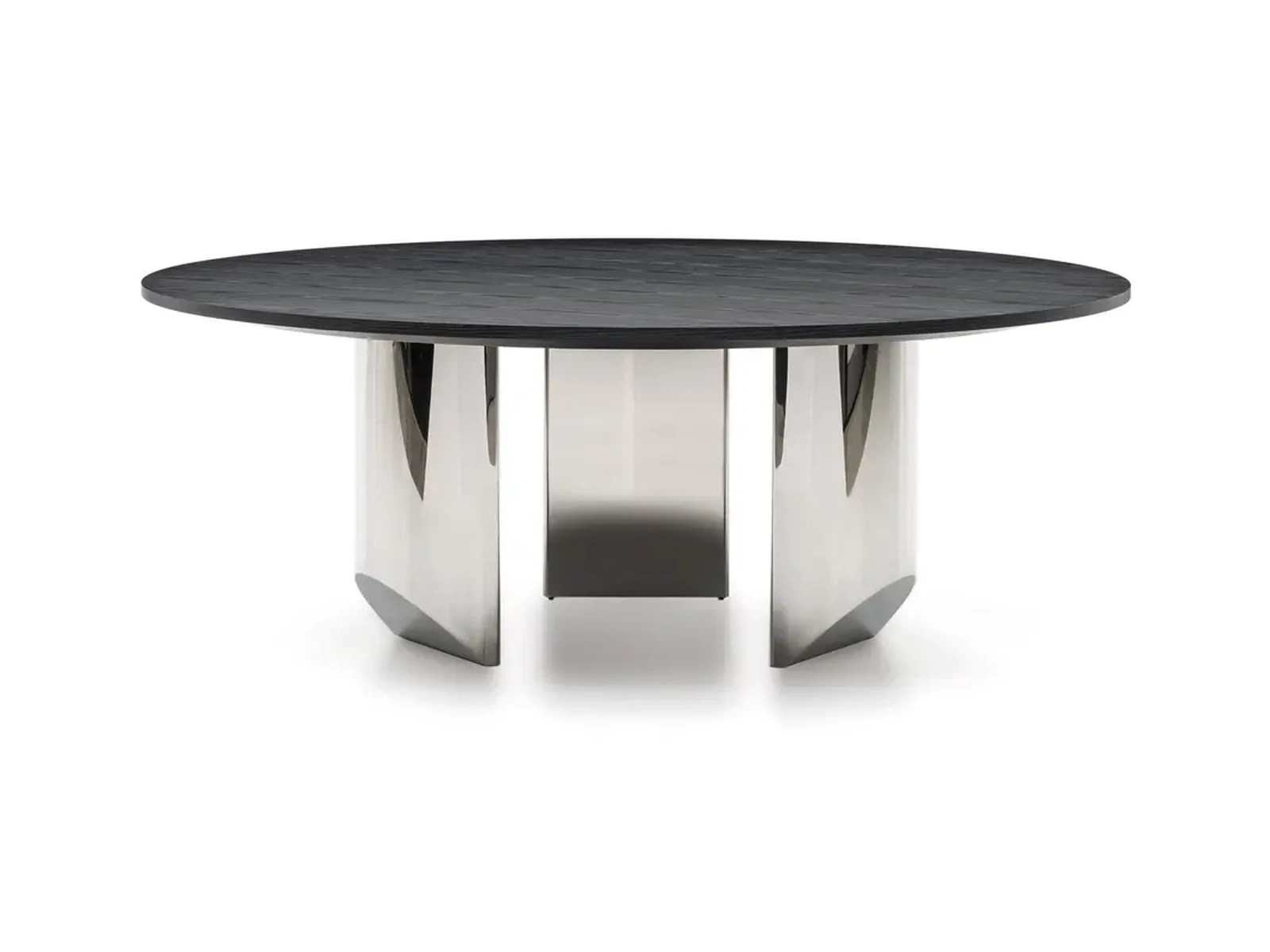
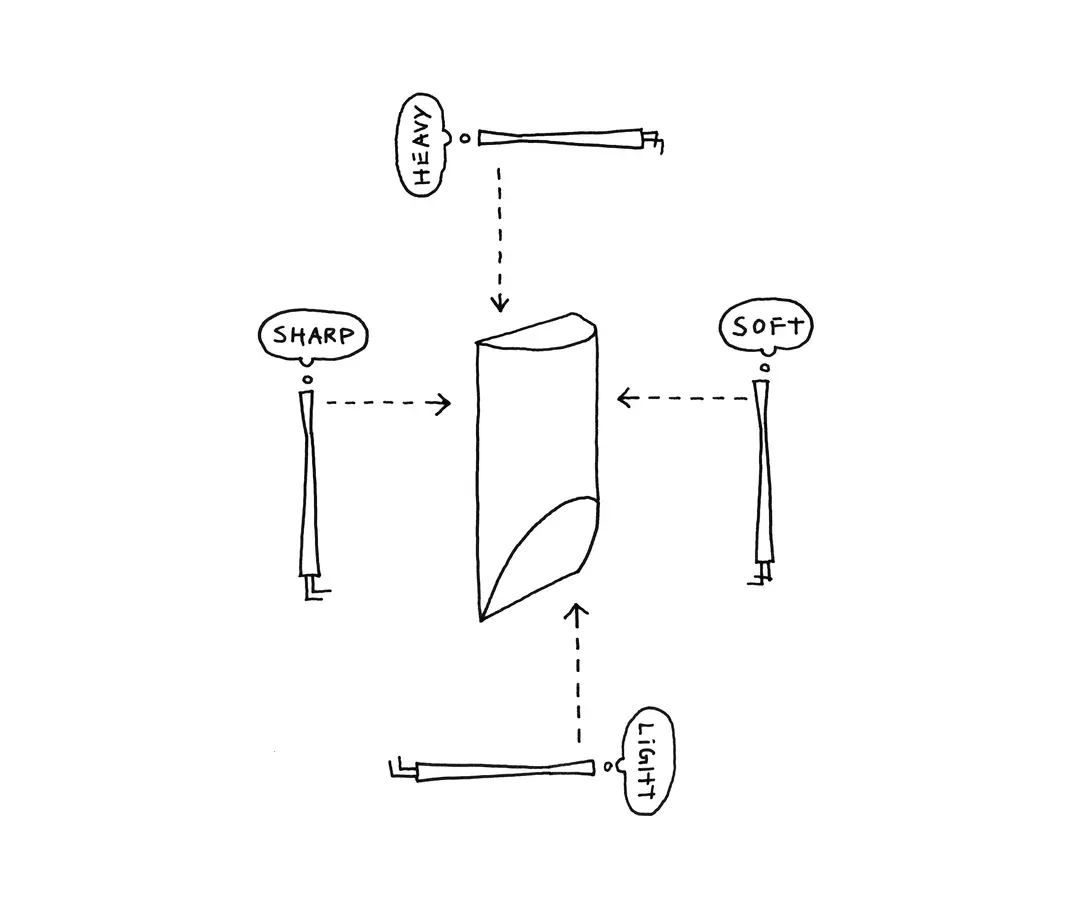
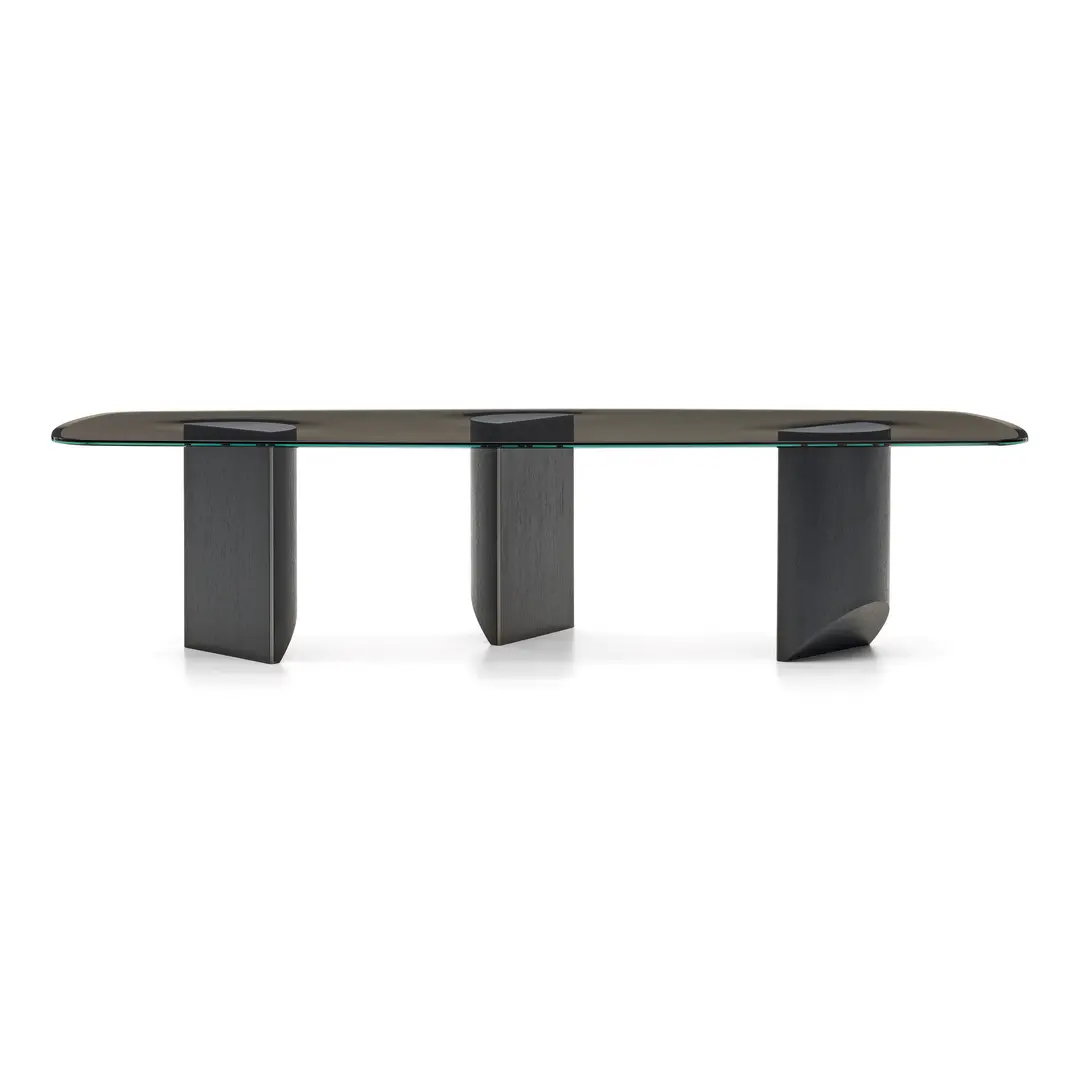
Wedge Dining repeats an idea built for drama: legs formed as bulky, rounded masses that taper to a narrow, chisel-shaped tip where they meet the floor. That contrast, a heavy upper mass balanced on a fine point, makes the table look as though it is barely resting on its supports rather than planted on them. In the barrel-shaped top, the same shapes reappear, since the legs are visible through the glass, so the construction is seen from above the table, not just from the side.
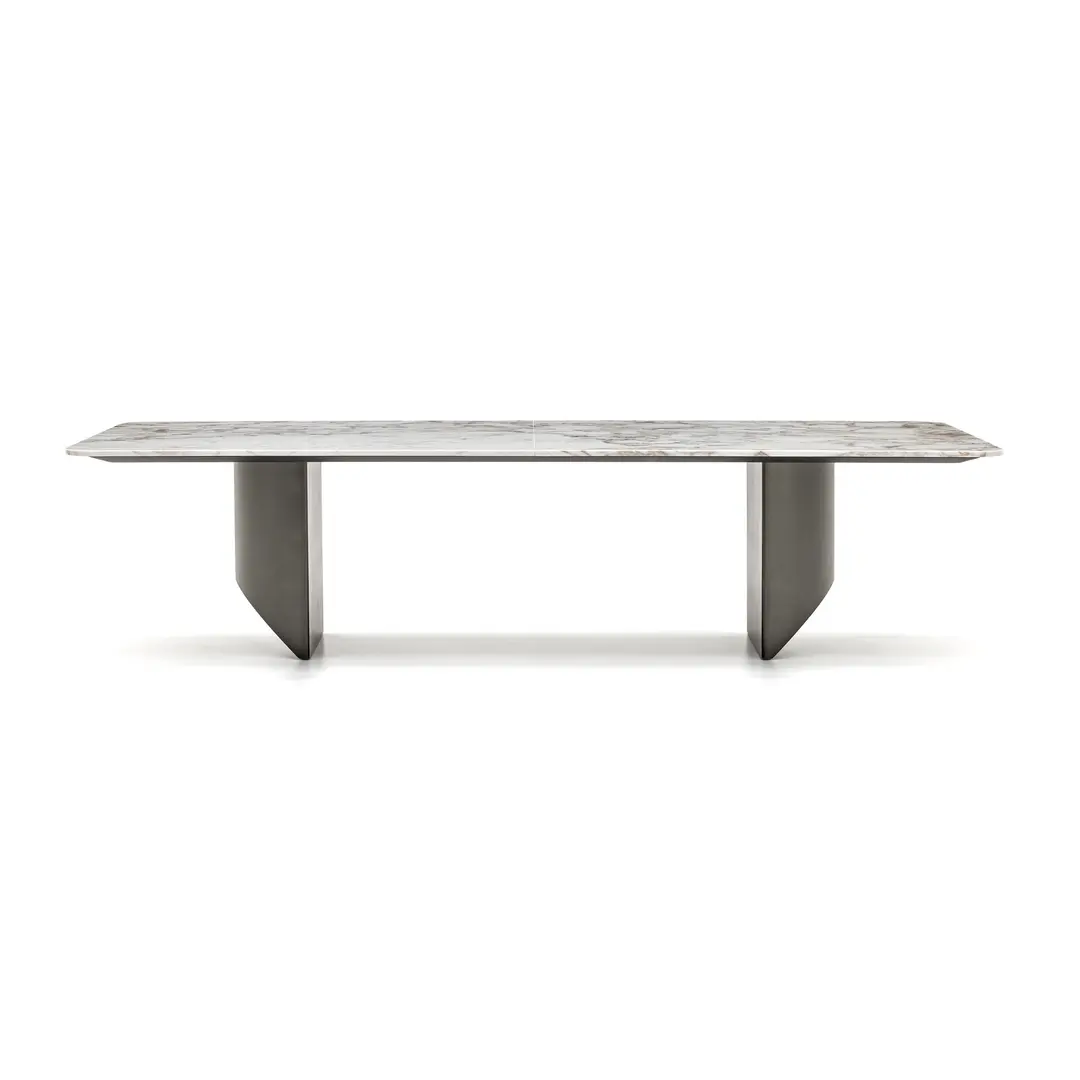
The top is offered in three shapes, round, rectangular or barrel-shaped, each with four slightly curved sides rather than hard corners. Materials carry different moods: a bronzed laminated glass top makes the legs beneath it visible and turns the base into a feature, a flamed ash wood top in an open-pore lacquer gives a warmer plane, and marble options such as Nero Marquina bring a dense, veined surface with real weight. The bases come in a satin or polished stainless steel, paired with the marble or wood tops, while the wenge-finished base is reserved for the glass top.
At dining proportions, Wedge suits a room where the table itself is meant to be noticed, not just a surface to gather around. The glass top works well where a room already has other reflective or pale surfaces, while the wood or marble tops suit a room that wants more visual weight at floor level. Because Wedge also exists as a coffee table in the same family, a designer can carry the same leg language into an adjoining living space. A base shaped this boldly needs clearance for chairs to pull back without catching the legs.
For full specifications, materials, and configuration options, visit the Minotti official website.
| Overall Width | 260–310 cm |
|---|---|
| Overall Depth | 120–130 cm |
| Overall Height | 73 cm |
| Diameter | 160 / 180 / 200 cm (round) |
Shown dimensions reflect one configuration. Additional sizes and configurations are available. Contact our team for full sizing options.
| Frame Material | Semi-circular metal legs with oblique chisel-tip shape |
|---|---|
| Top Material Options | Bronzed glass; Moka ash wood; Calacatta marble; Stone Grey marble; Nero Marquina marble (20mm) |
| Finish Options | Malt-colour satin metal or polished steel legs |
Full material and finish specifications are available on request. Contact our team or visit our showroom to view samples.
| Designer | Nendo (Oki Sato) |
|---|---|
| Country of Manufacture | Italy |
| Stacking | No |
| Outdoor Rated | No |
All products are shipped directly from the manufacturer. Lead time varies. Our team will confirm at the time of order. Full tracking information is provided once your order ships.
Trade pricing for interior designers, architects, and hospitality professionals.