Edmonton & Calgary Showrooms
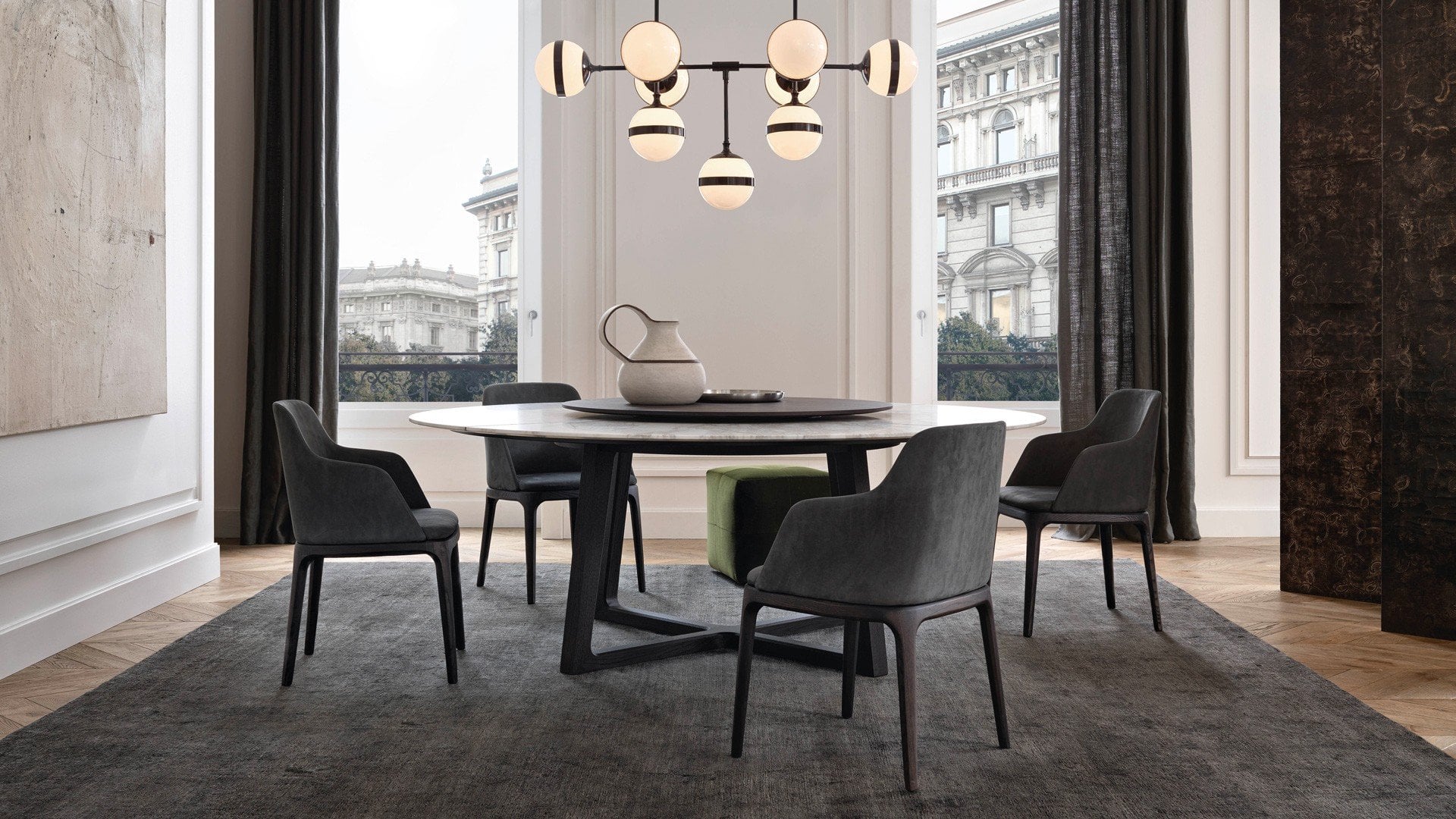
by Emmanuel Gallina
Our team will prepare a tailored quote for you
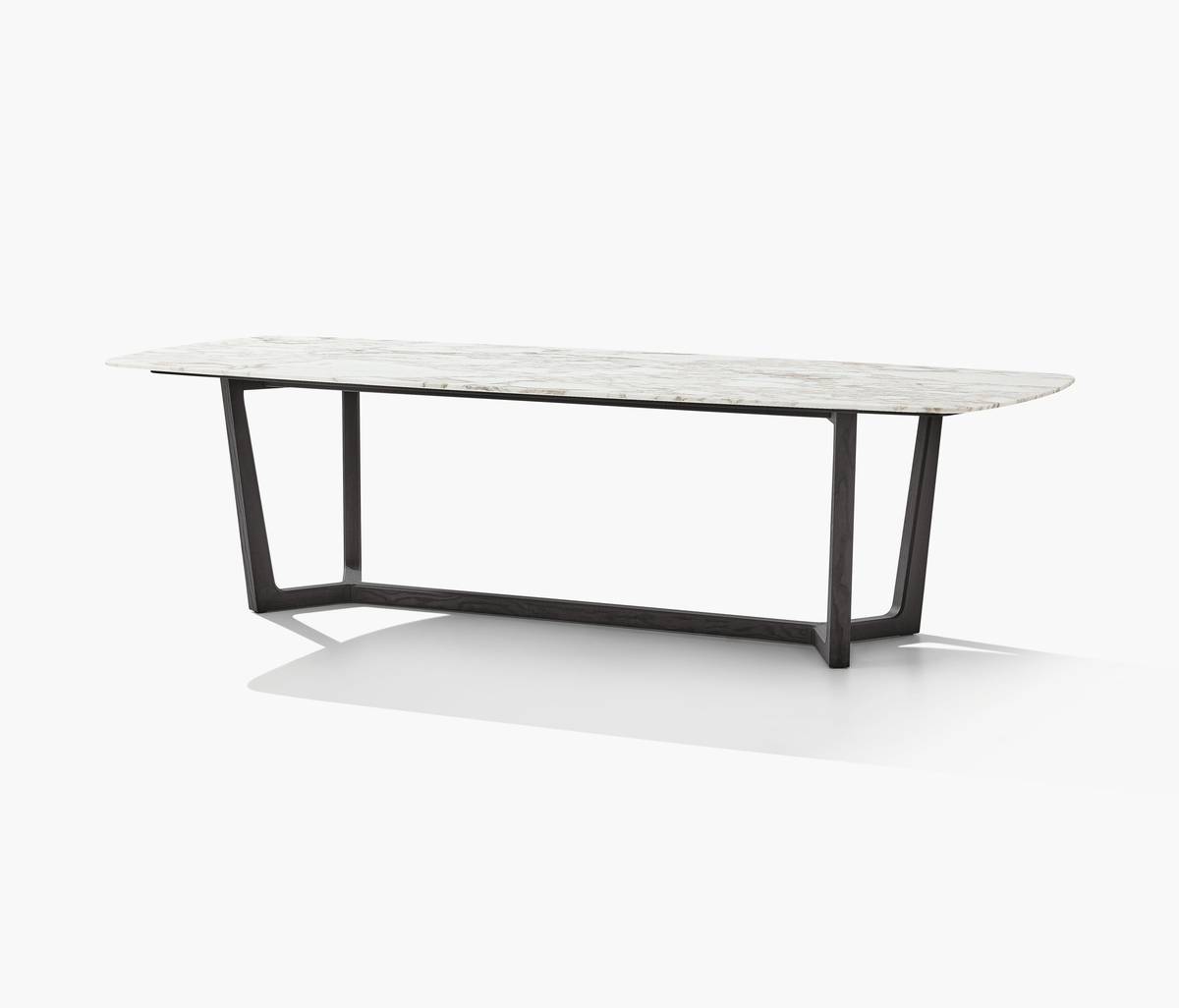
Concorde starts from a choice about shape rather than material: the same wood structure supports either a rectangular or a round top, and the round version adds a central tray that turns on its own axis. That rotating tray is the detail that turns a round table from a fixed surface into one where dishes and serving pieces can be moved to whoever is sitting at the table.
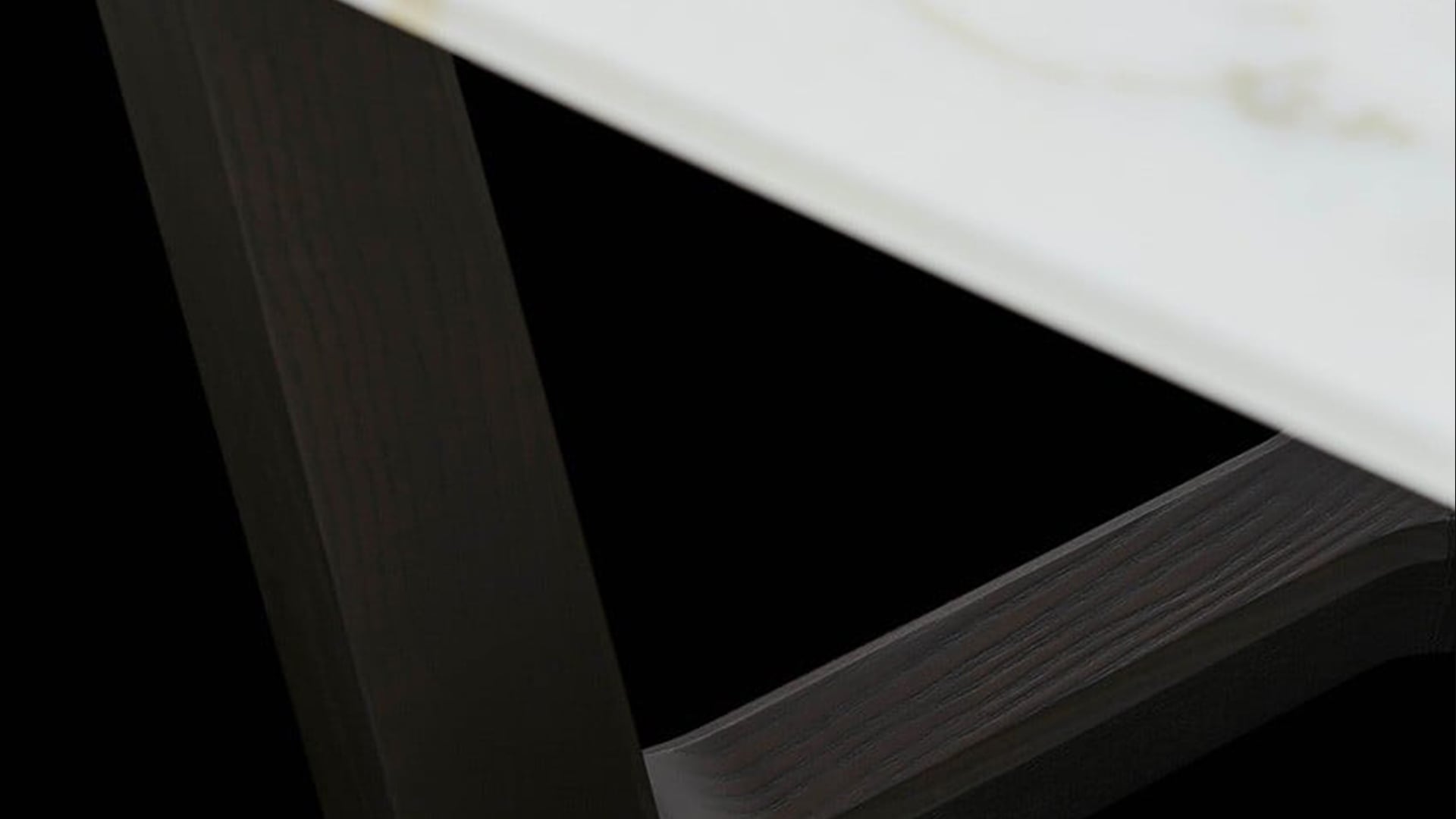
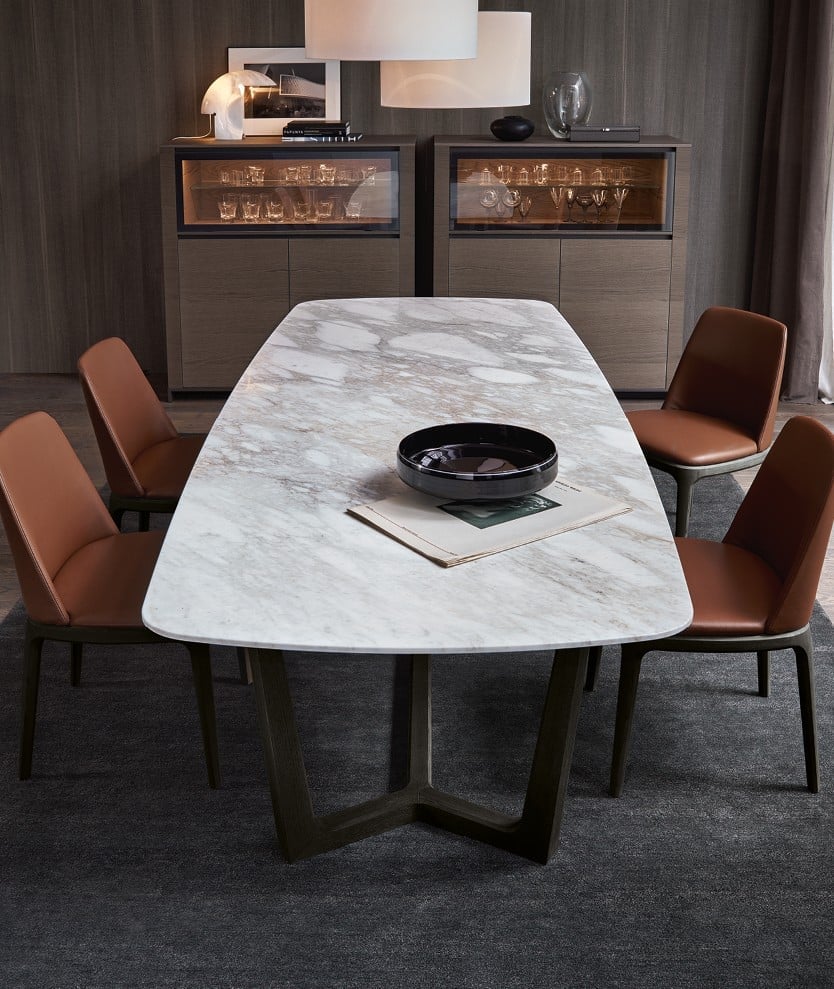
The base is built in wood throughout, whichever top shape is chosen, which keeps the structure visually consistent from one version of the table to the next. On the rectangular table, the top can be built in wood, in marble, or in glass set into a wooden frame, a spread that runs from a warmer, everyday surface in wood to a more formal, heavier one in marble, with glass sitting between the two as a lighter, more transparent option. The round table’s top is available in wood or marble, following the same logic without the glass option that only suits the rectangular shape.
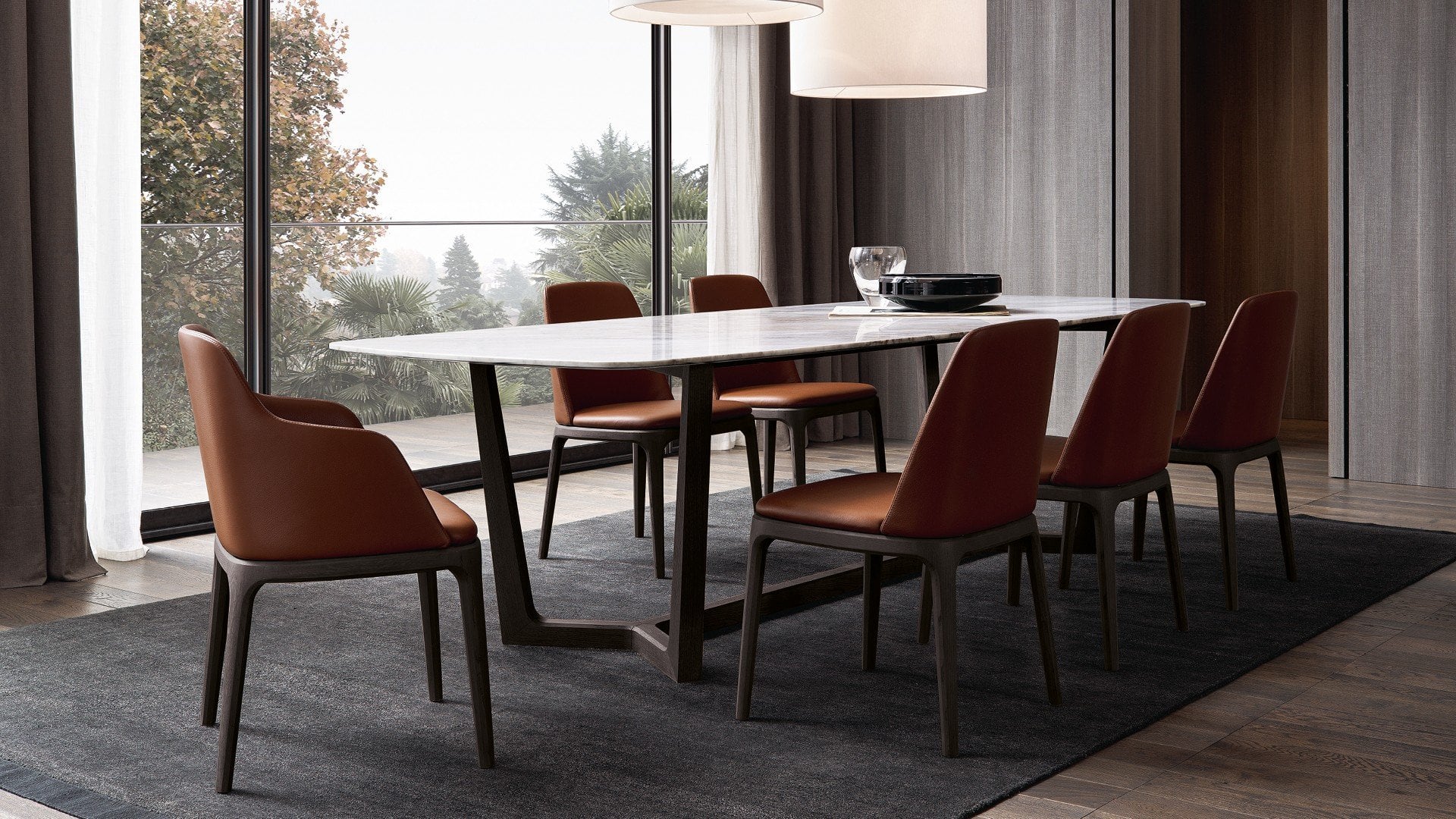
In a dining room, Concorde’s rotating tray makes the round version suited to a table used for shared, informal meals as much as for formal dining, while the rectangular version, particularly in marble, suits a room built around a single fixed dining table rather than a flexible one. Designers should decide on shape before material, since the round table’s tray is only available with that shape, and the choice between wood, marble and glass then follows from how formal the room is meant to feel.
For full specifications, materials, and configuration options, visit the Poliform official website.
| Designer | Emmanuel Gallina |
|---|
All products are shipped directly from the manufacturer. Lead time varies. Our team will confirm at the time of order. Full tracking information is provided once your order ships.
Trade pricing for interior designers, architects, and hospitality professionals.